Describe the idea
Start with the intended market logic, conditions and constraints rather than a blank code editor.
Oculus Algorithms · Strategy technology
Oculus Algorithms is Forefront's AI-assisted environment for constructing, iterating, historically testing and explaining user-defined strategy logic.

Oculus helps users translate defined ideas and conditions into quantitative rules that can be reviewed, refined and tested against historical data.
The platform is intended to make strategy logic easier to construct and understand. It does not turn a historical result into a prediction or guarantee that a strategy will perform similarly in live conditions.
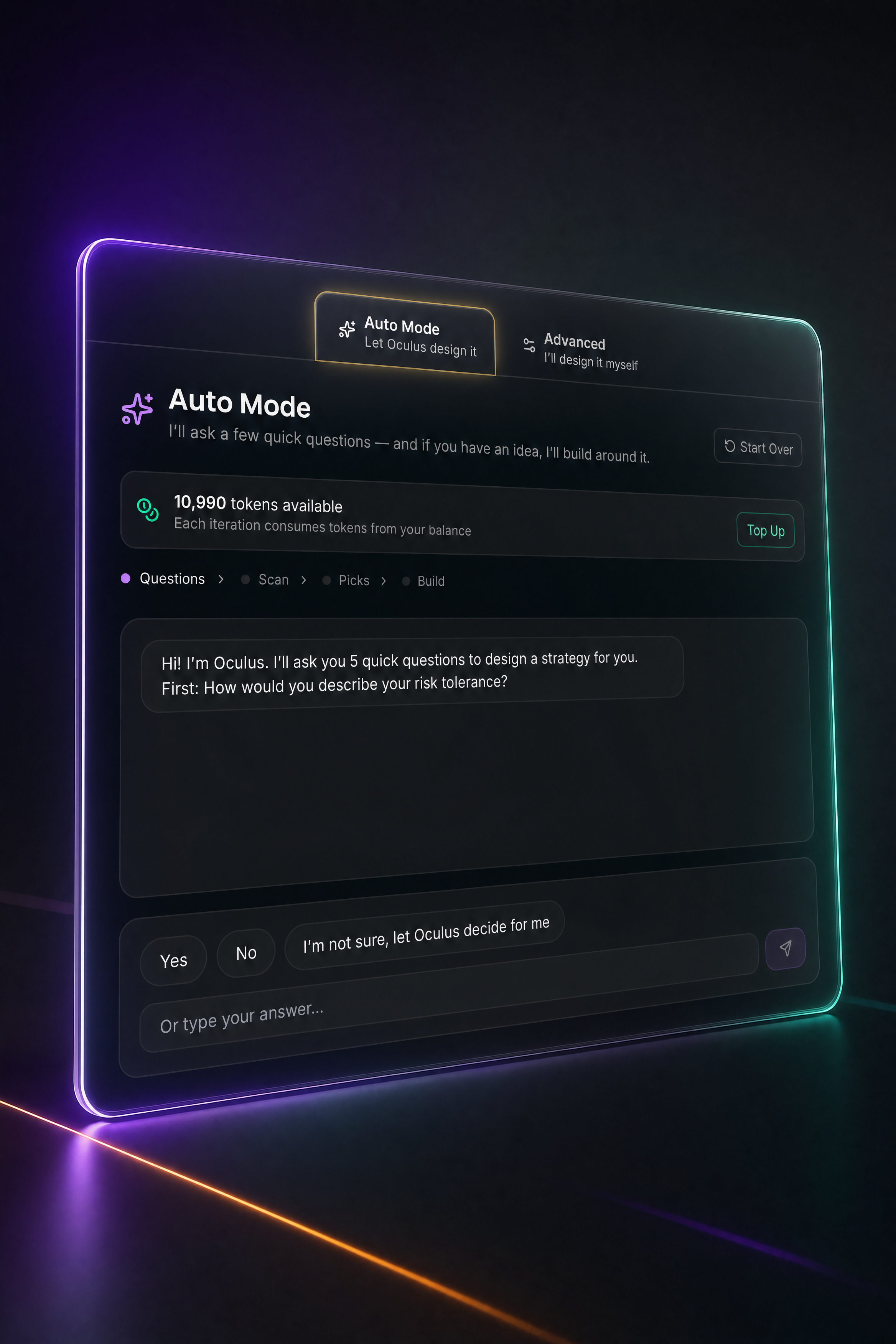
Official Oculus Algorithms Auto interface.
Core workflow
Oculus combines guided construction with deeper configuration paths so different users can work at the level of specificity appropriate to their process.
Start with the intended market logic, conditions and constraints rather than a blank code editor.
Translate the concept into conditions and parameters that can be inspected and revised.
Evaluate model output across selected historical periods and assumptions.
Prepare eligible strategy logic for supported use through the wider Forefront technology ecosystem.
Product views
The official interfaces below show the strategy-building and analysis environment. Current fields, terminology and availability remain controlled by the live product.
A guided path for turning a defined strategy concept into structured logic.
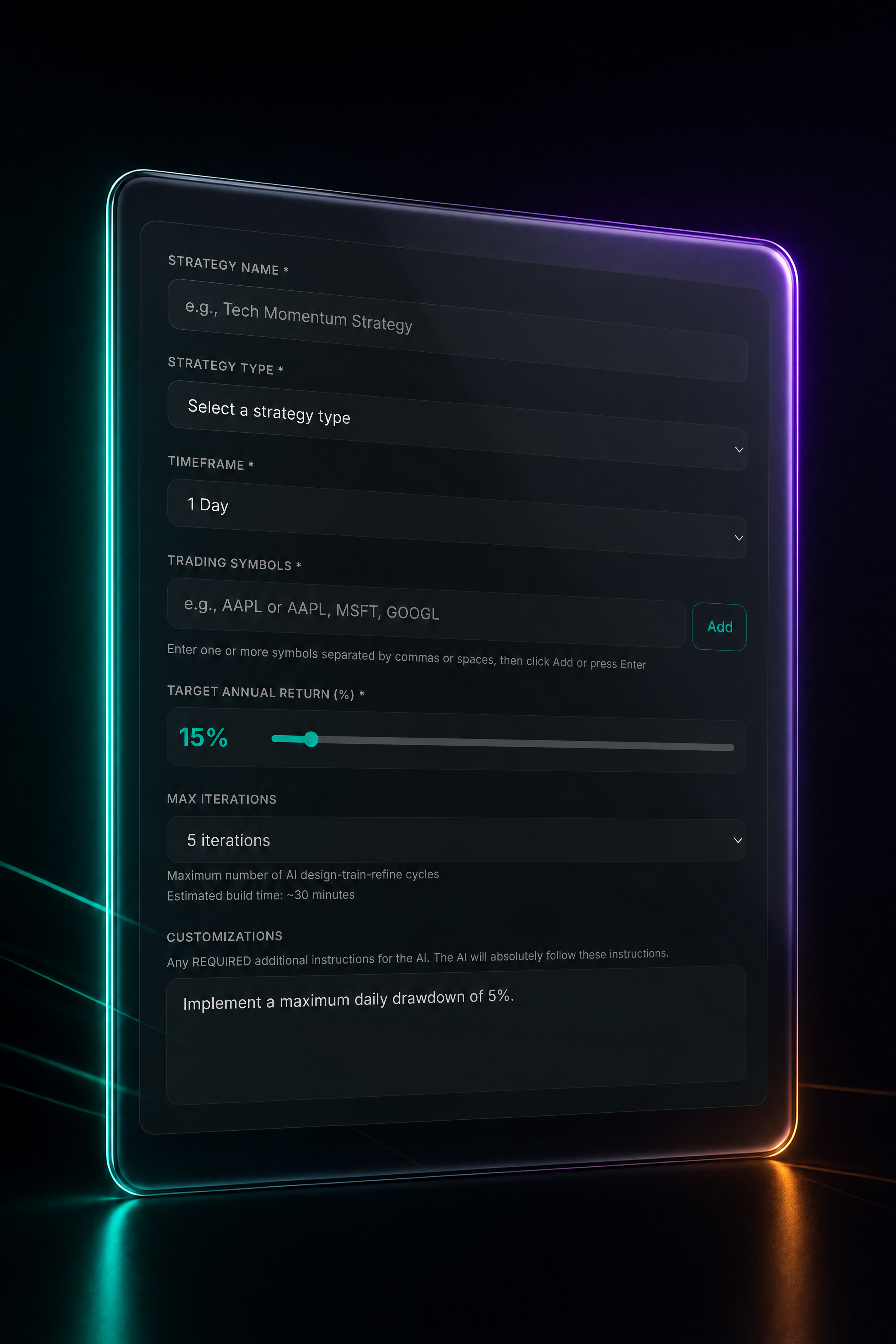
More granular configuration for users who want direct control over strategy construction.
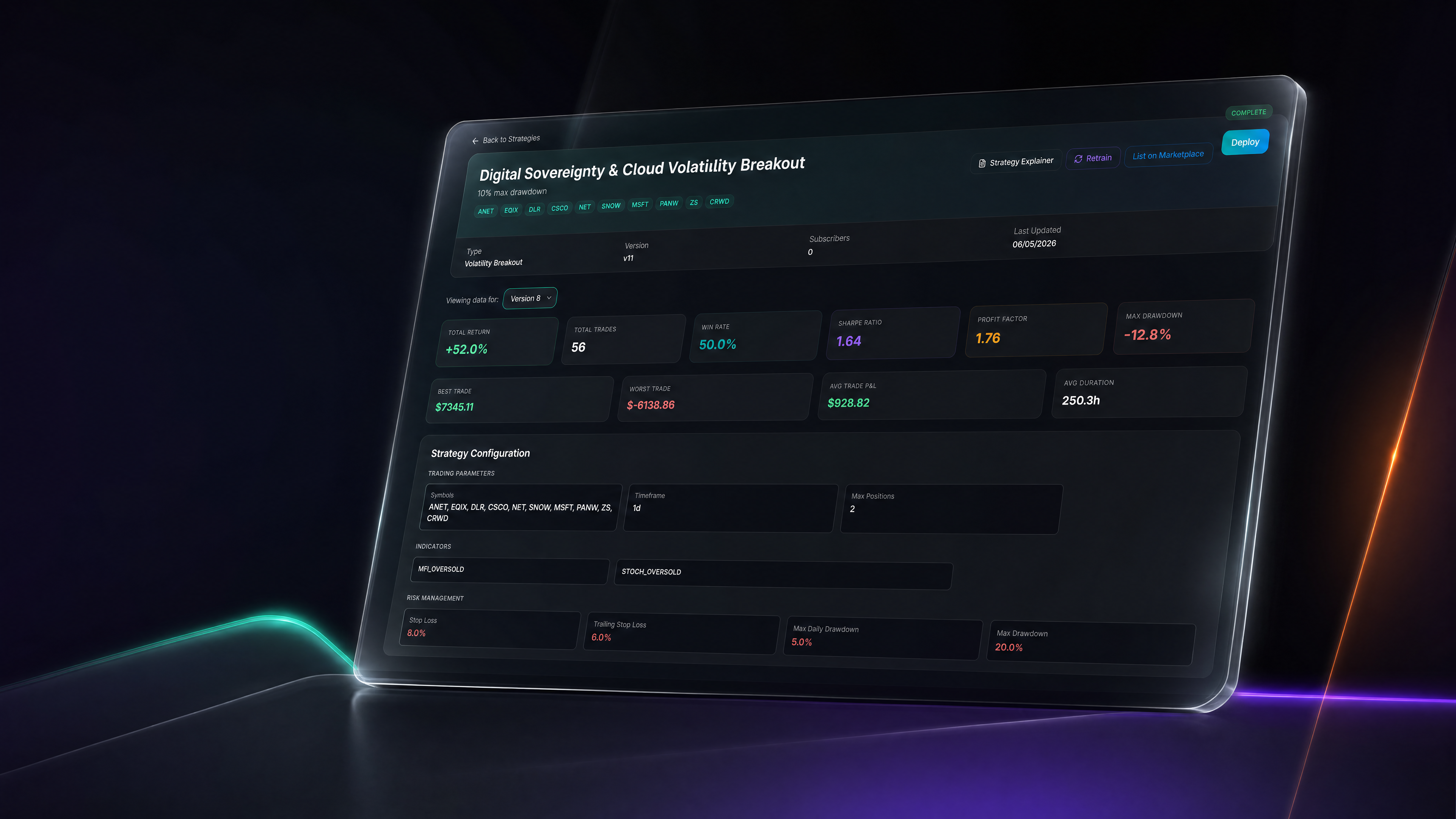
Results and diagnostics intended to support review rather than promise a live outcome.
Relationship to Atlas
Within the wider ecosystem, Forefront licenses Oculus technology for compatible Atlas workflows. Oculus supports the strategy-development side of the experience, while Atlas is the user-facing platform through which eligible users can select, configure and supervise supported workflows.
SignalSynk addresses a separate technical responsibility: supported brokerage connectivity and order transmission. The products work together without collapsing those roles.